
Printable Bloom's Taxonomy
Printable Bloom's Taxonomy - Web anderson,$l.$w.,$&$krathwohl,$d.$r.$(eds.).$(2001).$ataxonomy$for$learning,$teaching$andassessing:$arevisionof$bloom's$taxonomyof$educational$ outcomes:$complete$edition,$new$york$:longman.$ anderson&$krathwohl,$2001$ anderson&$krathwohl,$2001$ $ $ Web in 1956, benjamin bloom with collaborators max englehart, edward furst, walter hill, and david krathwohl published a framework for categorizing educational goals: Web benjamin bloom created a taxonomy of measurable verbs to help us describe and classify observable knowledge, skills, attitudes, behaviors and abilities. Bloom’s taxonomy attempts to classify learning stages from remembering facts to creating new ideas based on the acquired knowledge. Web benjamin bloom created a taxonomy of measurable verbs to help us describe and classify observable knowledge, skills, attitudes, behaviors and abilities. The idea of bloom’s taxonomy is that learning is a consecutive process. Free to download and print. A statement of an objective contains a noun (type of knowledge) and a verb (type of cognitive process using the knowledge). Lower order thinking higher order thinking This assists instructors when creating lesson and course objectives. Web the below overview shows the progression of bloom’s taxonomy, how each thinking skill applies in practice, and examples of activities using digital tools.” view full size image. A group of cognitive psychologists, curriculum theorists and instructional researchers, and testing and assessment specialists published in 2001 a revision of bloom’s taxonomy with the title a taxonomy for teaching, learning, and. Originally, bloom’s taxonomy was designed as a way of gauging competence by placing a student’s knowledge on one of 6 levels which are often represented visually in the form of a pyramid. Before applying a concept in real life, we must understand it. Web the below overview shows the progression of bloom’s taxonomy, how each thinking skill applies in practice,. To change or create into some‐. Within each domain, learning can take place at a number of levels ranging from simple to complex. Discuss a new concept you can attempt to implement in future based on what you. Web bloom’s taxonomy comprises three learning domains: The following is a list of measurable action verbs that can be used when you. Bloom found that over 95 % of the test questions students encounter require them to think only at the lowest possible level.the recall of information. To change or create into some‐. Understand and implement bloom’s taxonomy in the classroom; A statement of an objective contains a noun (type of knowledge) and a verb (type of cognitive process using the knowledge).. This title draws attention away from the somewhat static notion of. Knowledge, comprehension, application, analysis, synthesis, and evaluation. Creating bloom’s definition understanding of exhibit memory of previously learned material by recalling facts, terms, basic concepts, and answers. Lower order thinking higher order thinking In 1956, benjamin bloom headed a group of educational psychologists who developed a classification of levels of. Here, bloom’s taxonomy is situated in the four types of knowledge, factual. Within each domain, learning can take place at a number of levels ranging from simple to complex. A group of cognitive psychologists, curriculum theorists and instructional researchers, and testing and assessment specialists published in 2001 a revision of bloom’s taxonomy with the title a taxonomy for teaching, learning,. And breaking information into parts by thing new. This title draws attention away from the somewhat static notion of. A group of cognitive psychologists, curriculum theorists and instructional researchers, and testing and assessment specialists published in 2001 a revision of bloom’s taxonomy with the title a taxonomy for teaching, learning, and assessment. To change or create into some‐. Bloom found. Web a guide to bloom’s taxonomy course content. Development of the taxonomy benjamin bloom was an educational psychologist and the chair of the committee of educators at the university of. Web in 1956, benjamin bloom with collaborators max englehart, edward furst, walter hill, and david krathwohl published a framework for categorizing educational goals: Here, bloom’s taxonomy is situated in the. Web posted by jessica shabatura | sep 18, 2014 | syllabus & course creation bloom’s taxonomy provides a list of action verbs based on each level of understanding. Here, bloom’s taxonomy is situated in the four types of knowledge, factual. The theory is based upon the idea that there are levels of observable actions that indicate something is happening in. Demonstrating basic understanding of facts and ideas. Understand and implement bloom’s taxonomy in the classroom; The framework elaborated by bloom and his collaborators consisted of six major categories: Web what is bloom’s taxonomy? Bloom found that over 95 % of the test questions students encounter require them to think only at the lowest possible level.the recall of information. The idea of bloom’s taxonomy is that learning is a consecutive process. Web the below overview shows the progression of bloom’s taxonomy, how each thinking skill applies in practice, and examples of activities using digital tools.” view full size image. This title draws attention away from the somewhat static notion of. Originally, bloom’s taxonomy was designed as a way of gauging competence by placing a student’s knowledge on one of 6 levels which are often represented visually in the form of a pyramid. Learn to connect the course content; The framework elaborated by bloom and his collaborators consisted of six major categories: Web revised bloom’s taxonomy action verbs. Lower order thinking higher order thinking This assists instructors when creating lesson and course objectives. Students will be able to verb noun phrase. Web in 1956, benjamin bloom with collaborators max englehart, edward furst, walter hill, and david krathwohl published a framework for categorizing educational goals: Web bloom’s taxonomy verbs this table of verbs lists cognitive processes that fit into bloom’s six categories and help identify the cognitive complexity or the order of thinking. A group of cognitive psychologists, curriculum theorists and instructional researchers, and testing and assessment specialists published in 2001 a revision of bloom’s taxonomy with the title a taxonomy for teaching, learning, and assessment. Knowledge, comprehension, application, analysis, synthesis, and evaluation. Web bloom’s taxonomy of educational objectives objectives state what we want our students to learn and be able to do. Web a guide to bloom’s taxonomy course content.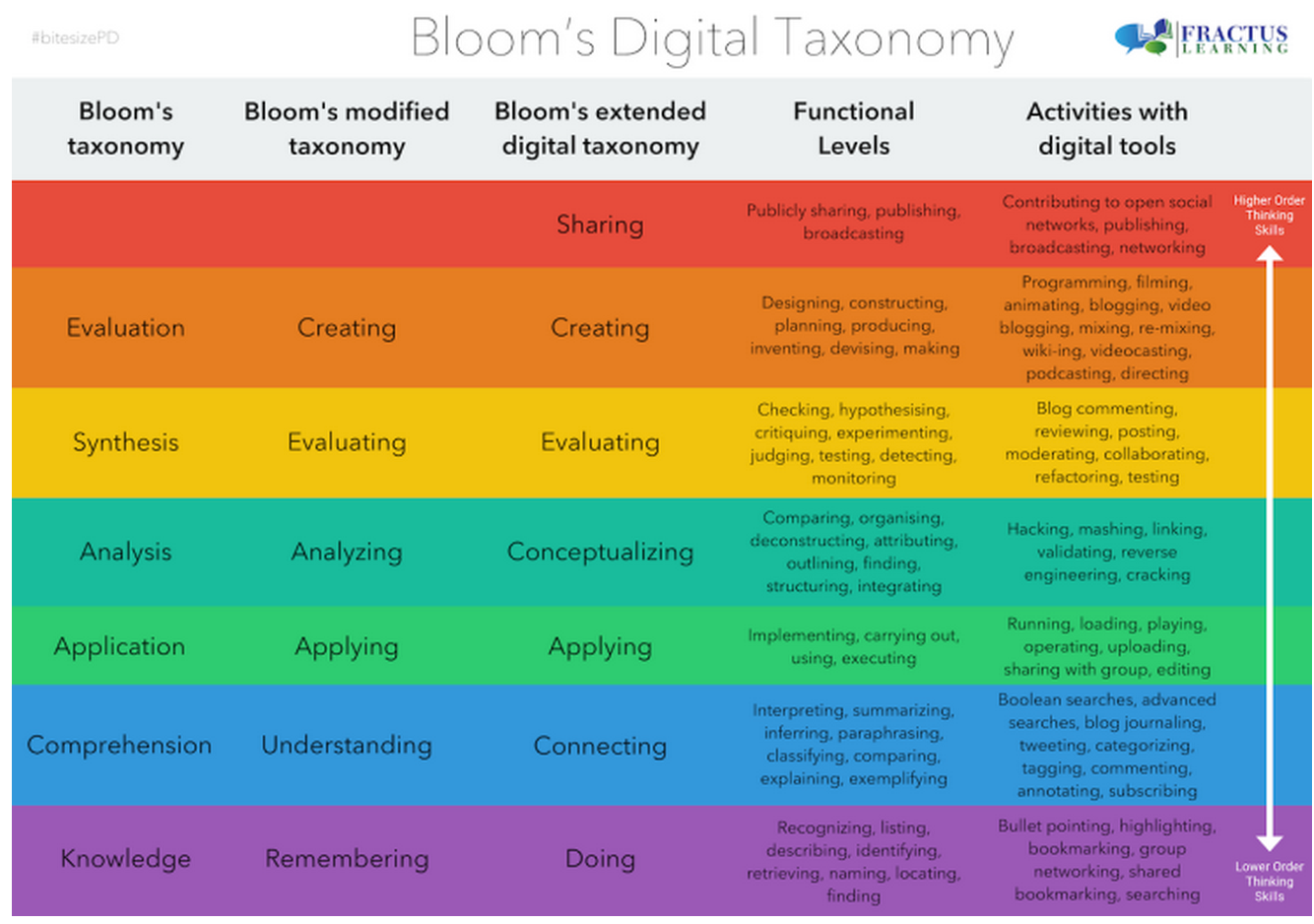
New Bloom's Taxonomy Poster for Teachers Educators Technology

FREE Blooms Taxonomy printable flipchart not an iLesson but very
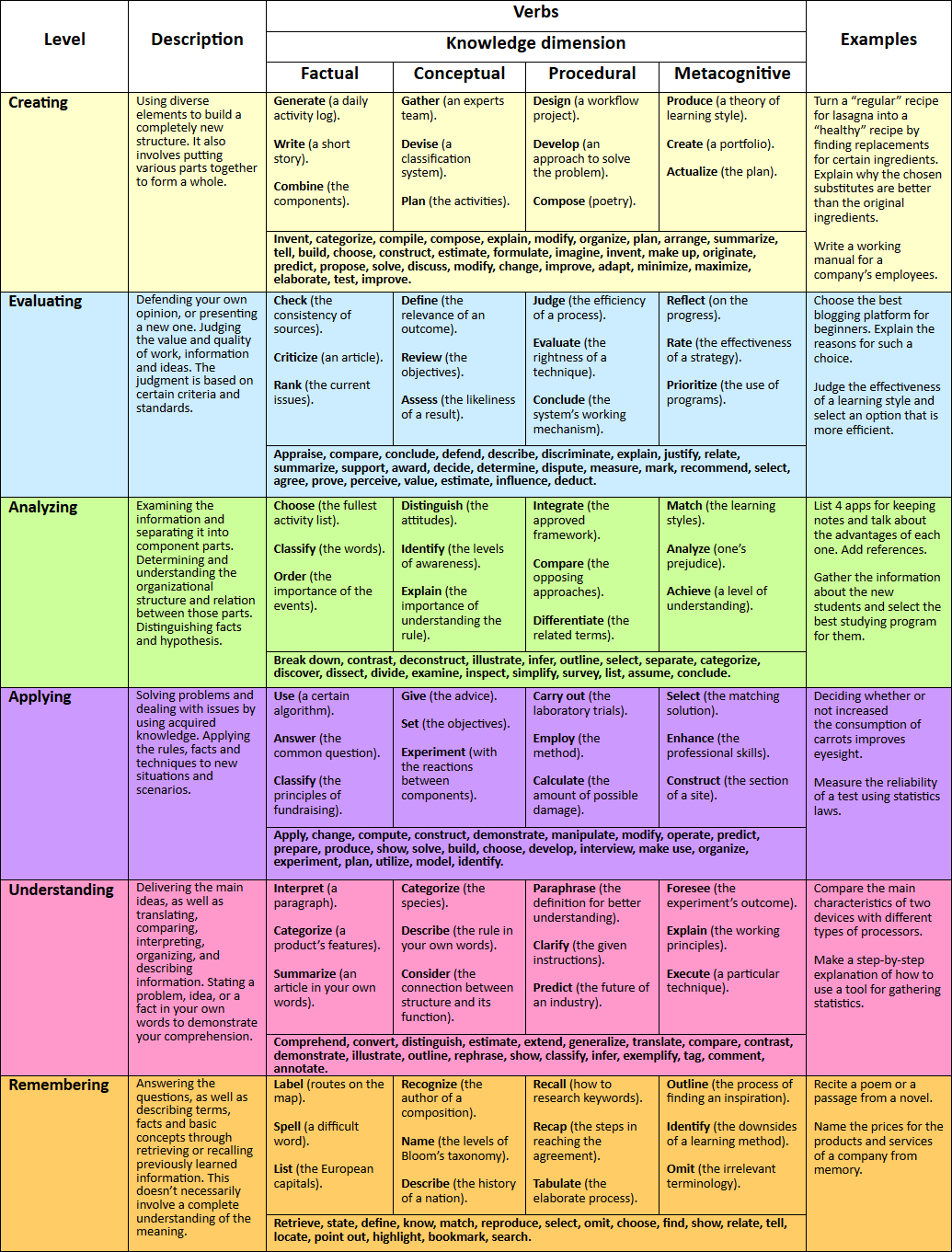
Bloom's Taxonomy—How to Make Your Studying Perfect?
:max_bytes(150000):strip_icc()/5857112597_eae735e2af_o-58ac97533df78c345b72a141.jpg)
How to Construct a Bloom's Taxonomy Assessment

Bloom's Taxonomy Education Table
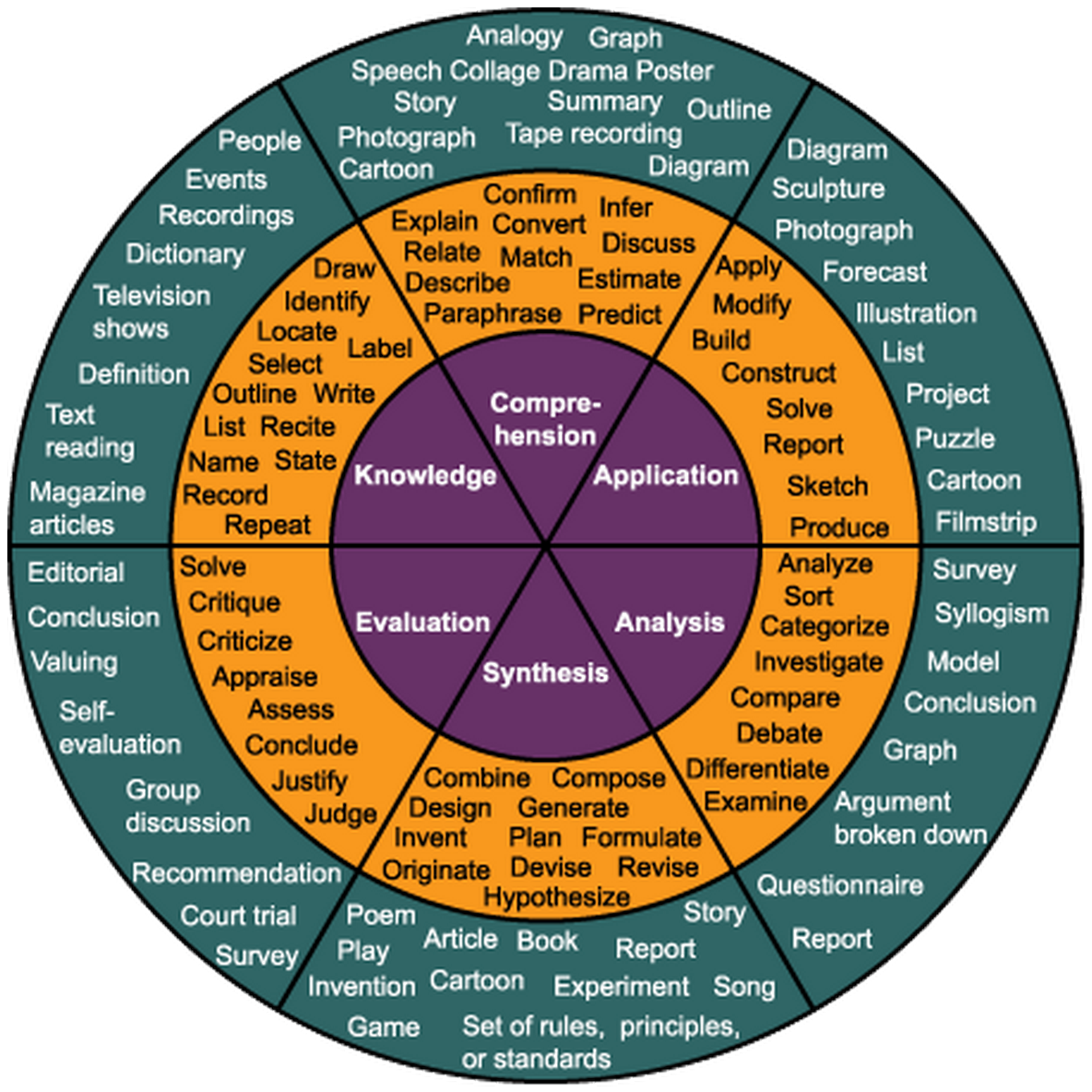
8 Wonderful Blooms Taxonomy Posters for Teachers Educational
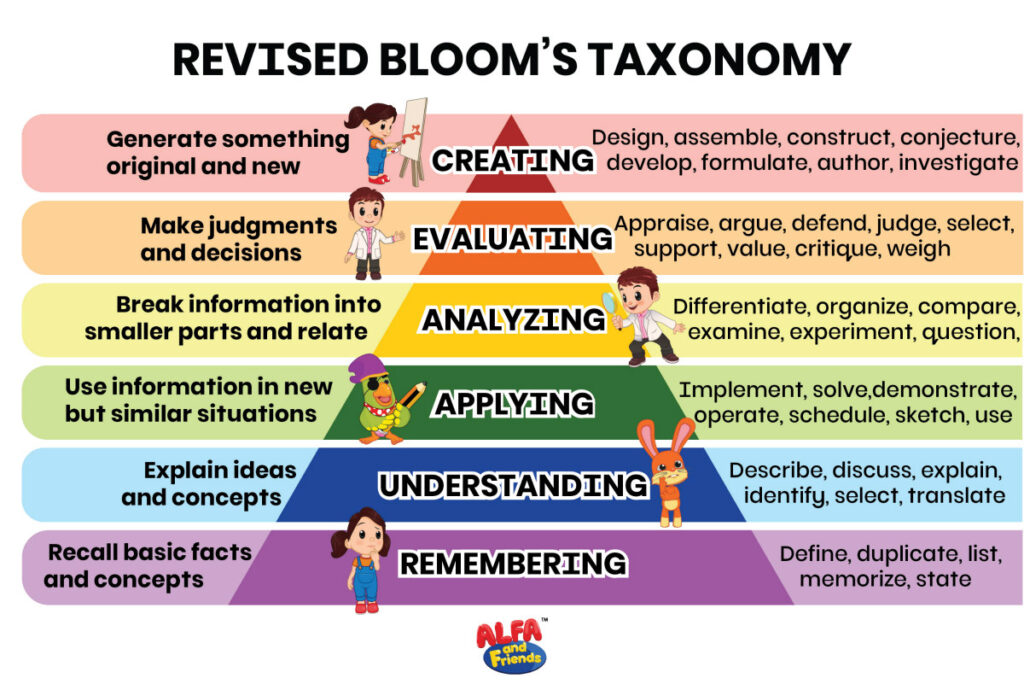
Using Bloom’s Taxonomy to Guide Interactions in the Classroom ALFA

Bloom's Taxonomy Explained in Plain English Blooms taxonomy, Critical

The Bloom's Taxonomy Verbs Poster for Teachers verb poster The Bloom's

Bloom's Taxonomy Verbs Free Classroom Chart
Free To Download And Print.
Central Message 力 黎女 With Adorable Animal Fables As A Theme.
Web Benjamin Bloom Created A Taxonomy Of Measurable Verbs To Help Us Describe And Classify Observable Knowledge, Skills, Attitudes, Behaviors And Abilities.
Demonstrate Facts And Ideas By Organizing, Comparing, Translating,
Related Post: